
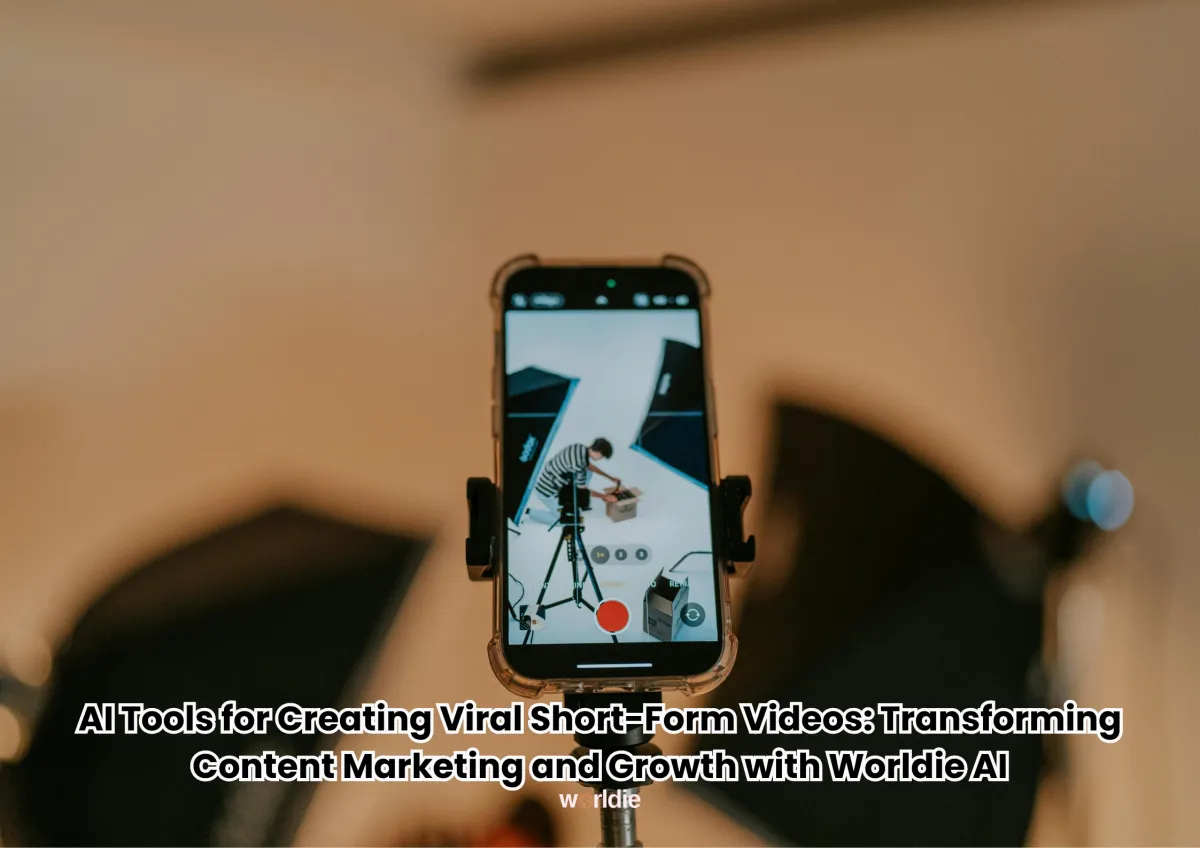
AI Tools for Creating Viral Short-Form Videos: Transforming Content Marketing and Growth with Worldie AI
AI tools for creating viral short-form videos are reshaping the landscape of digital marketing, offering businesses the opportunity to scale content production, maximize audience engagement, and accelerate revenue growth. These tools combine advanced machine learning, predictive analytics, and creative automation to optimize every stage of video creation, from ideation to publishing. Forward-thinking companies recognize that adopting AI is not just about efficiency—it is about building a content strategy capable of sustaining exponential growth.
By integrating AI into video production, businesses can reduce operational friction, predict trends before they peak, and ensure their content resonates across platforms. This strategic application of AI transforms not only marketing workflows but also overall business outcomes.
Understanding AI Tools for Creating Viral Short-Form Videos
AI tools in this domain leverage several core technologies. Natural language generation helps in scripting compelling narratives and captions. Computer vision identifies engaging visuals and sequences. Predictive analytics models anticipate trends and audience preferences. Autonomous video editing agents manage repetitive tasks and optimize content for various short-form platforms such as TikTok, Instagram Reels, and YouTube Shorts.
These tools function as a creative engine powered by data, turning insights into actionable video content. They allow marketing teams to focus on strategy and creative direction while AI handles repetitive, time-intensive tasks that traditionally slowed content production.
Inefficiencies in Traditional Short-Form Video Production
Many businesses still rely on manual video creation, which is slow, inconsistent, and resource-intensive. Teams spend hours editing clips, testing captions, and resizing content for multiple platforms. This often results in delayed campaigns and missed opportunities to leverage viral trends. Predicting which content will resonate is another major challenge. Without data-driven insights, companies rely on intuition, often producing videos that fail to achieve engagement targets. Maintaining consistent branding and messaging across different platforms is also difficult without automation, limiting the effectiveness of multi-channel campaigns.
How AI Enhances Video Production and Marketing Outcomes
AI tools eliminate bottlenecks in content production and optimize marketing strategies. Script generation tools use natural language processing to create compelling hooks and narratives tailored to specific audiences. Video editing AI can automatically select high-impact frames, add effects, and optimize transitions to enhance viewer engagement. Predictive analytics analyze historical trends, audience behaviors, and platform performance to forecast which content formats are most likely to go viral. This enables businesses to act proactively, creating content that maximizes engagement while minimizing trial and error.
AI-powered automation also ensures that videos are correctly formatted for each platform, saving time and maintaining brand consistency. It allows marketing teams to maintain a higher publishing frequency without sacrificing quality.
Core Technologies Driving AI Video Virality
Natural language generation and sentiment analysis allow scripts and captions to resonate with viewers emotionally. Computer vision identifies impactful scenes, removes unnecessary frames, and optimizes visual aesthetics. Predictive analytics evaluates real-time trends, engagement patterns, and audience behaviors to forecast potential virality. Autonomous video agents automate repetitive tasks such as editing, captioning, and posting, enabling continuous content pipelines without overburdening human teams.
These technologies work together to transform video creation from a slow, manual process into a dynamic, data-driven, and highly scalable operation.
Industry Applications
E-commerce brands can use AI to generate product-focused short-form videos that highlight features in compelling ways, increasing conversion rates. SaaS companies can produce rapid tutorials or feature demonstrations to educate users while driving product adoption. Entertainment and media organizations can create clips optimized for social sharing, improving engagement and reach. Healthcare providers can deliver personalized, educational videos efficiently, and professional service firms can transform thought leadership content into shareable, high-impact video formats.
Across industries, AI tools allow teams to produce more content in less time while improving the quality and relevance of each video.
The Worldie AI Approach: Design → Build → Release
Worldie AI’s approach begins with designing a content workflow that captures brand voice, audience insights, and platform requirements. In the build phase, AI models are integrated into automated pipelines for scripting, editing, and trend analysis, with human oversight to ensure alignment with strategic goals. The release phase deploys videos across multiple platforms, monitors engagement, and continuously refines content strategies based on performance data. This methodology emphasizes infrastructure and scalability, ensuring that AI systems grow with the business while maintaining control and quality.
Metrics for Evaluating AI-Generated Video Success
Measuring success involves more than view counts. Key metrics include engagement rate, shareability, audience retention, and the impact on conversions or lead generation. AI enables real-time tracking of these metrics, allowing teams to adjust strategies on the fly. Predictive analytics also help identify which types of content are likely to succeed in the future, reducing the guesswork associated with traditional video marketing.
Challenges and Considerations
AI implementation is not without challenges. Data fragmentation, inconsistent brand guidelines, and over-reliance on AI outputs without strategic oversight can reduce effectiveness. Integration across multiple platforms requires careful planning, and organizations must establish clear KPIs to align AI outputs with business objectives. Maintaining a balance between automation and human creativity ensures that content remains authentic and aligned with brand values.
Real-World Transformations
Businesses that successfully implement AI-driven video strategies can scale from occasional content drops to continuous publishing engines. Predictive analytics allow campaigns to respond dynamically to audience behavior. Creative teams shift from repetitive editing to strategic oversight, increasing efficiency while maintaining quality. Campaigns become adaptive, leveraging data to maximize reach and engagement. Companies often see measurable improvements in traffic, conversion rates, and overall brand presence.
Future Trends
AI-generated short-form video is evolving toward fully autonomous, multi-channel content ecosystems. Hyper-personalized videos, real-time feedback loops, and AI-driven interactive experiences will further enhance engagement. Businesses that adopt these innovations early will gain a significant competitive edge, creating content that consistently resonates while scaling operational capabilities.
Strategic Takeaways
AI-generated video should be viewed as an infrastructure for growth rather than a simple output. Data-driven insights, trend responsiveness, and human oversight are crucial. Organizations that integrate AI thoughtfully can maximize efficiency, audience engagement, and measurable revenue impact.
FAQs
Can AI tools create viral short-form videos on their own?
AI significantly increases the chances of virality by analyzing trends, optimizing scripts, and predicting audience engagement. Human strategy and creativity are essential for final outputs.
Do companies need extensive video libraries to benefit from AI?
AI can generate new content from minimal datasets and public trends. Larger libraries improve personalization and predictive accuracy, but are not required for initial adoption.How much human input is necessary?
Creative and strategic oversight is critical to ensure brand alignment and authentic messaging, even as AI handles repetitive tasks.Can AI adapt videos for multiple platforms automatically?
Yes. AI tools can reformat videos, optimize captions, and adjust visuals for different platforms, maintaining engagement across channels.What is the fastest way to see ROI from AI video tools?
Focusing on trend-driven content, predictive engagement, and automation of repetitive production tasks accelerates efficiency, reach, and measurable returns.